


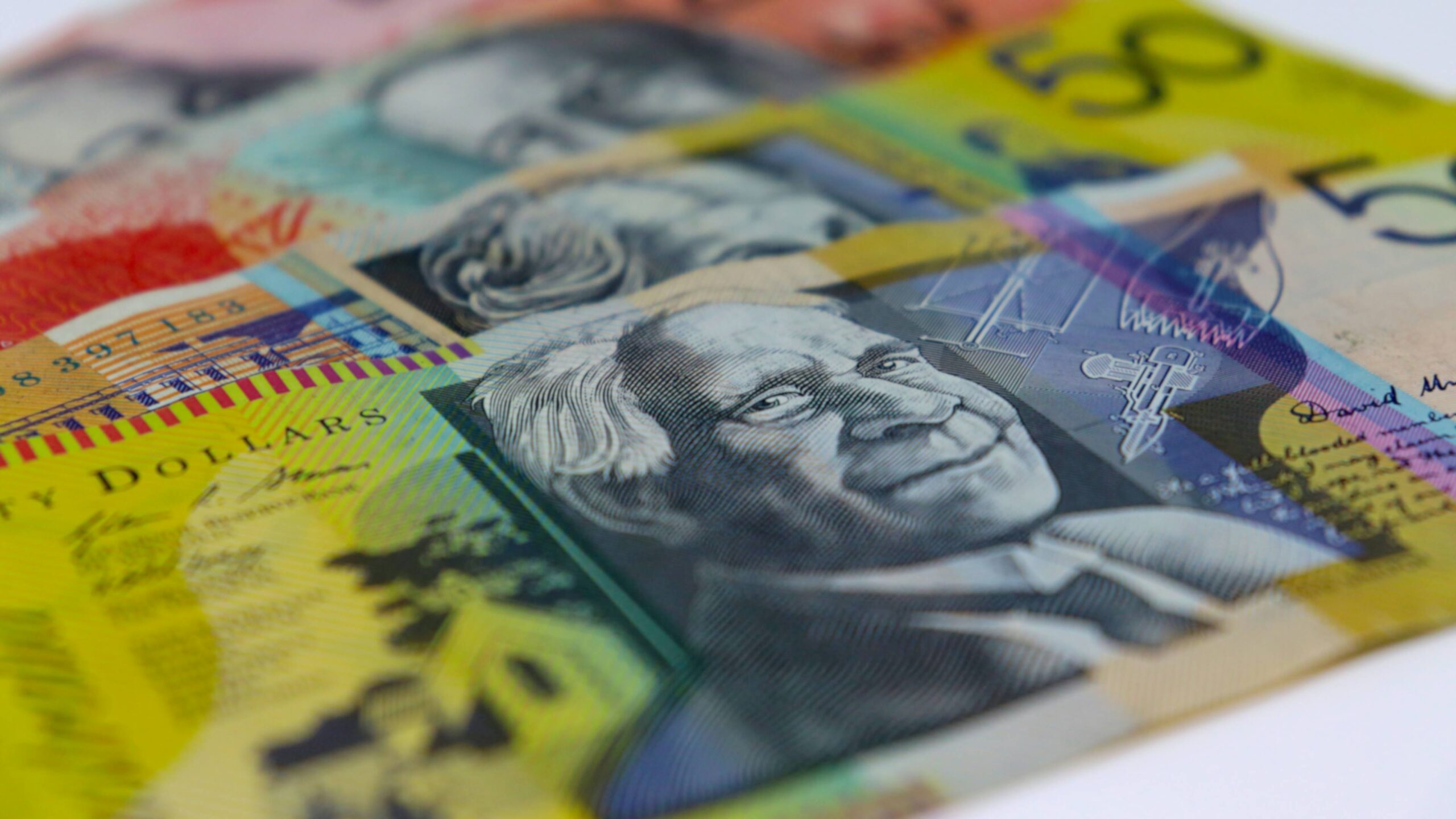
The Australian dollar fell sharply on Thursday after official data showed the country’s unemployment rate jumped to a five-year high in October, prompting traders to abandon bets on further interest rate increases by the Reserve Bank of Australia and to price in cuts next year. The currency dropped 0.5% to $0.6679, extending its losing run to eight consecutive sessions and moving close to its lowest level this year, according to Reuters.
The data marks a sharp turn for a central bank that raised rates only two weeks ago and has spent much of the year focused on stubborn inflation. It also widens the policy gap with the US Federal Reserve, which is widely expected to tighten again in December, adding to pressure on the Australian currency.
Key Takeaways
- Australia’s jobless rate rose to 4.9% in October from 4.7%, the highest since October 2021.
- Employment fell by 43,500, against forecasts of a gain of about 25,000, a second straight monthly decline.
- The Australian dollar slid 0.5% to $0.6679, its eighth successive daily loss.
- Swaps markets removed any chance of further RBA hikes and moved to price rate cuts in the second half of 2027.
Labour Market Weakens Sharply
Figures from the Australian Bureau of Statistics showed the seasonally adjusted unemployment rate rose to 4.9% in October from 4.7% in September, the highest reading since October 2021. Economists had expected the rate to hold steady, according to market surveys cited by ActionForex and BigGo Finance.
Employment fell by 43,500 during the month, compared with consensus forecasts for an increase of roughly 25,000, marking a second consecutive monthly decline. Part-time jobs accounted for most of the drop, falling by 40,600, while full-time employment declined by 2,900, according to the bureau’s data as reported by several outlets.
The number of unemployed people rose by 17,800 to 753,700, and the participation rate slipped to 66.6% from 66.8%, indicating that the rise in joblessness did not stem from more people entering the workforce. The employment-to-population ratio fell to 63.3%, and total monthly hours worked declined by 0.2%.
Rate Expectations Swing Towards Cuts
The Reserve Bank of Australia lifted its cash rate by 25 basis points to 4.85% on 3 November, its fifth increase this year and the highest level since late 2008, in a six-to-three vote, according to ABC News and Reuters. Minutes of that meeting, released on Tuesday, showed a divided board debating whether the tightening already delivered was sufficient to contain inflation.
Following Thursday’s data, swaps markets no longer priced any risk of a further hike and instead pointed to lower rates in the second half of next year, Reuters reported. Markets assigned a 68% probability to a cut in June 2027, with a reduction in August regarded as nearly certain.
George Tharenou, chief economist at UBS, brought forward his forecast for the first Reserve Bank of Australia rate cut to August 2027 from November and now expects 75 basis points of easing in the cycle rather than 50, citing elevated inflation alongside deteriorating labour and housing markets, according to Reuters. He described the pace of weakening in those markets as worrying.
Bonds Rally as Currency Slides
Australian government bonds rallied strongly on the shift in expectations. Three-year yields fell 17 basis points to 4.612%, their lowest since August, while 10-year yields dropped 12 basis points to 4.977%, a three-month low, according to Reuters.
The Australian dollar was approaching key support at $0.6662, its lowest level this year, and also weakened against its New Zealand counterpart, falling 0.6% to NZ$1.2156, the lowest since early September. The currency had found little support from strong wage data released earlier in the week, and has been the weakest of the major currencies over the past week, according to ActionForex.
The decline also reflects a broadly firm US dollar, which hovered near a 19-month high after minutes of the Fed’s 27-28 October meeting showed officials saw a growing risk that they might need to step up efforts to control inflation. Fed Governor Christopher Waller said on Wednesday the central bank needed aggressive action, either through a half-point increase in December or guidance signalling further hikes, Reuters reported.
Global Risk Mood Adds Pressure
As a currency closely tied to global growth and commodity demand, the Australian dollar has also been weighed down by a sell-off in technology and artificial intelligence-linked shares, according to Reuters. Nvidia shares fell overnight despite the chipmaker beating revenue and guidance forecasts, while Australian equities came under pressure as mining stocks slid.
Earlier this month the Australian dollar was the worst-performing Group of Ten currency against the US dollar, with Australia standing out as the only G10 economy where markets were pricing a rate cut next year, Reuters reported. Thursday’s data strengthened that divergence with the US Federal Reserve, where markets fully price a quarter-point increase in December, according to the CME FedWatch tool.
Investors will now look to comments from RBA officials and to the next monthly labour force survey, due in mid-December, for confirmation of the weakening trend. Should further evidence of a cooling jobs market emerge while the Fed continues to tighten, analysts expect the widening interest rate gap to keep the Australian dollar under pressure into the RBA’s final meeting of the year.