



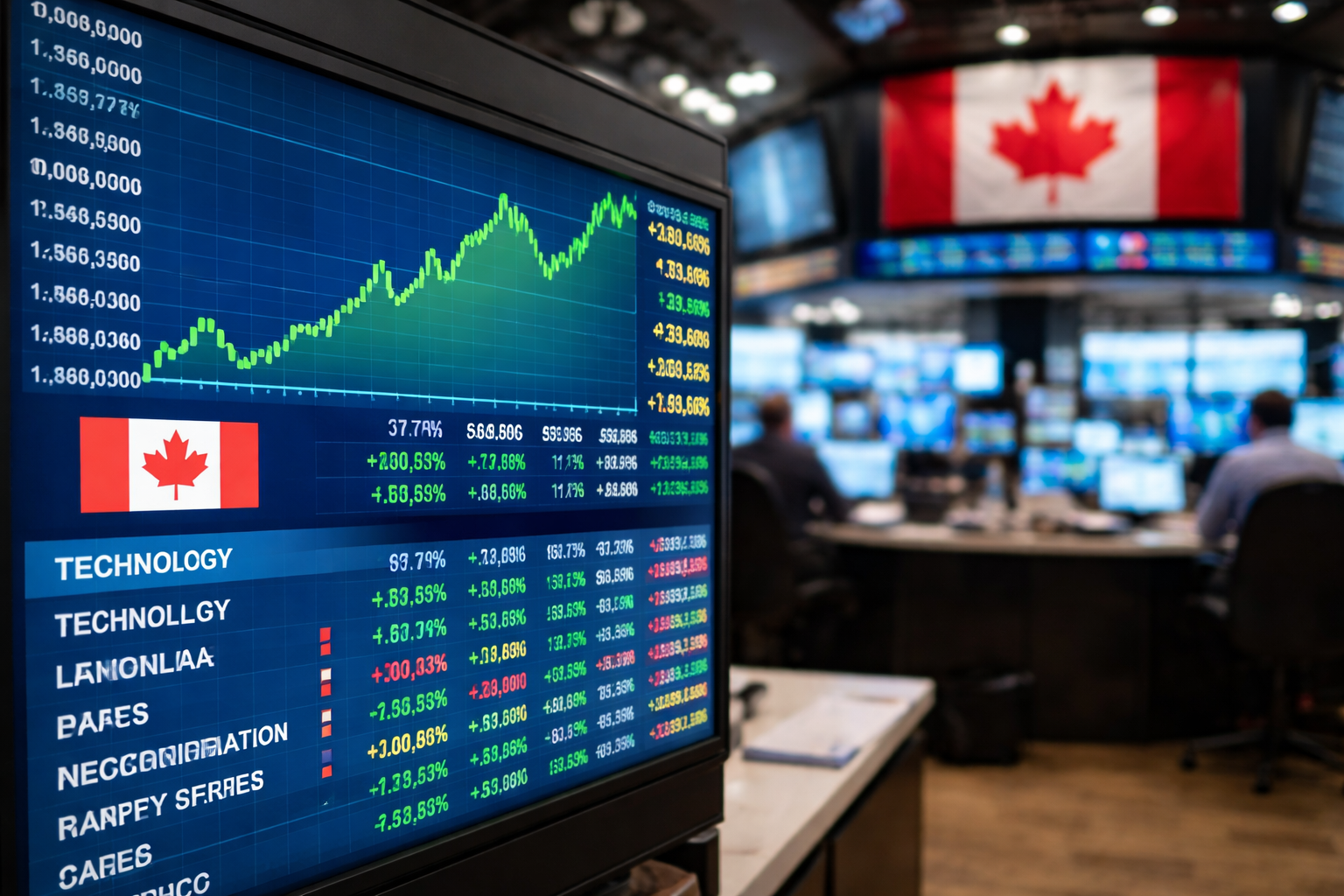
A partial recovery of the Canadian equities market was documented on Wednesday, March 4, 2026, as the primary stock index successfully reclaimed a portion of the substantial losses recorded during the preceding session. It was observed that the S&P/TSX composite index concluded the trading day with an appreciation of 157.92 points, representing a 0.5% increase to a level of 33,942.86. Despite this upward movement, it was noted by market analysts that the index remained significantly below the record closing high that had been established on Monday. This corrective phase was largely attributed to a robust performance within the technology sector and a broader institutional effort to reassess portfolio allocations in light of the ongoing conflict in the Middle East.
The stabilization of the Toronto market mirrored a similar trend in the United States, where equity markets closed in positive territory following reports that Iran had signaled a potential openness to diplomatic negotiations aimed at concluding the regional hostilities. It has been suggested by investment strategists that periods of geopolitical turmoil often serve as a catalyst for investors to pause and conduct a rigorous evaluation of their holdings. After several years of relatively low market turbulence, a fundamental rethinking of investment theses is believed to be underway. This shift in sentiment is increasingly focused on the intersection of interest rate trajectories and the shifting dynamics of international trade.
The technology sector emerged as the primary driver of the day’s gains, recording an overall increase of 2.2%. This surge was spearheaded by a notable 6% rise in the share price of the e-commerce giant Shopify Inc. The resilience of high-growth technology firms is perceived as a hedge against the uncertainty affecting more traditional industrial sectors. Simultaneously, the heavily weighted financial and materials groups each recorded an appreciation of 0.5%. Within the materials sector, metal mining shares were supported by a 1% increase in the price of gold, a movement that coincided with a temporary pause in the recent rally of the United States dollar.
Significant corporate activity was also documented within the mining industry, further influencing market dynamics. It was announced by SSR Mining that a binding memorandum of understanding had been entered into for the sale of its 80% stake in the Copler mine in Turkey to Cengiz Holding A.S. for a cash consideration of $1.5 billion. This divestiture resulted in a 14.6% surge in the company’s share price, reflecting investor approval of the substantial liquidity injection and the strategic exit from a complex geopolitical jurisdiction.
However, the optimistic tone of the equity markets was contrasted by sobering data regarding the domestic Canadian economy. It was revealed by S&P Global’s services Purchasing Managers’ Index (PMI) data that Canada’s services economy contracted for a fourth consecutive month in February. This downturn is understood to be a consequence of an uncertain trading environment, which has contributed to sustained declines in both business activity and the acquisition of new contracts. The persistent weakness in the services sector suggests that the broader economic framework is still grappling with the lingering effects of high interest rates and the disruption of global supply chains.
The market’s performance remained fragmented, with four of the ten major sectors concluding the session in negative territory. Both the industrials and consumer staples sectors were reported to have lost 0.7%, as investors pivoted away from defensive and capital-intensive industries toward growth-oriented technology assets. This rotation reflects a complex market environment where the immediate benefits of a “tech rebound” are being balanced against the long-term risks of a slowing domestic economy and the potential for persistent energy-induced inflation.
Ultimately, the 2026 narrative for the Canadian financial landscape is defined by the tension between institutional resilience and macroeconomic fragility. The ability of the S&P/TSX composite to claw back losses suggests a level of underlying confidence, yet the index’s failure to return to its Monday peak highlights the cautious posture adopted by global capital. As the first quarter of the year progresses, the focus of the investment community is expected to remain fixed on the durability of the technology rally and the potential for a diplomatic resolution to the Middle East conflict, which remains the primary variable in the global risk equation.