

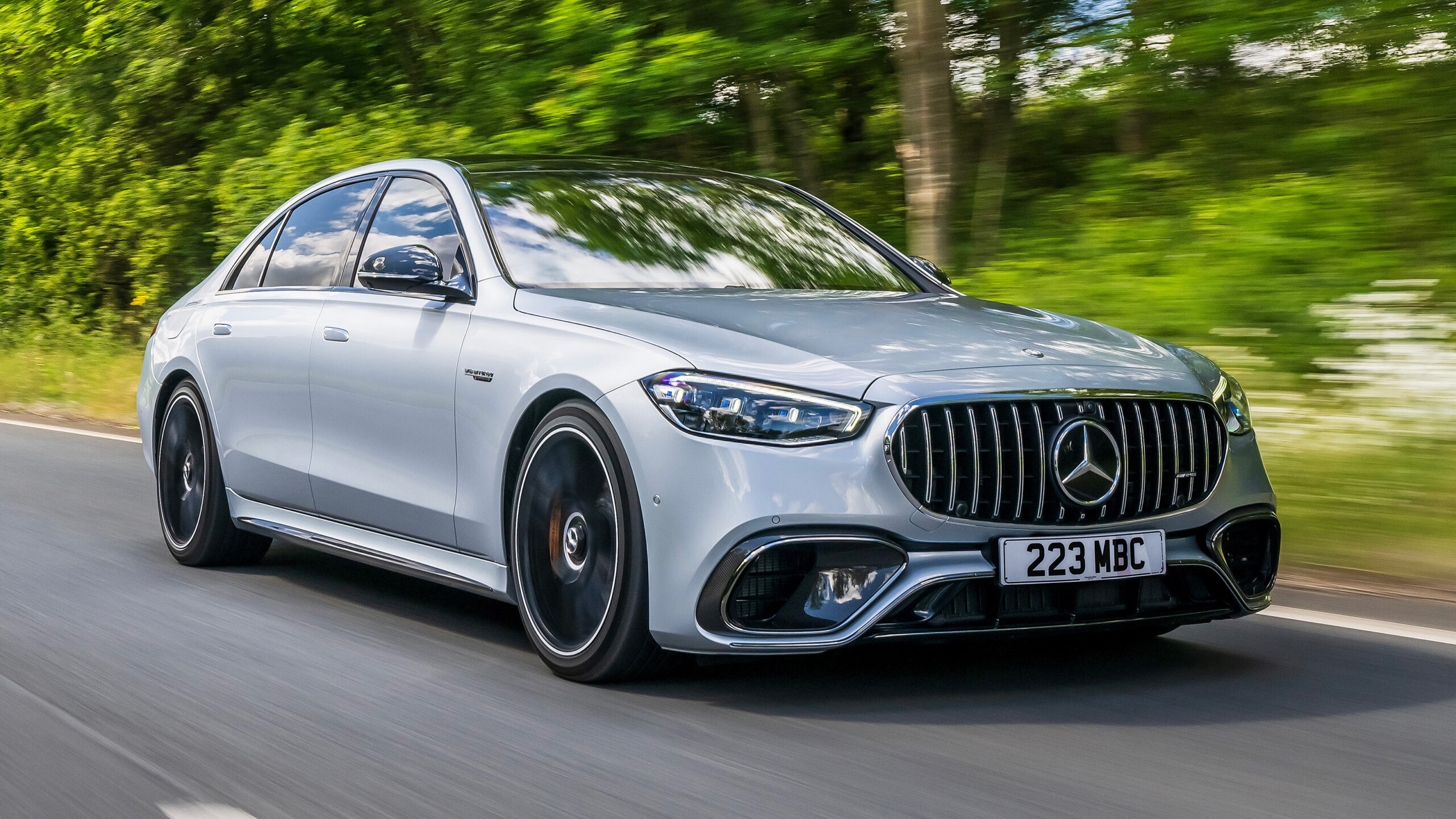
The transformation of the traditional luxury automobile into a “software-defined vehicle” has reached a significant milestone as Mercedes-Benz prepares to deploy its most advanced driving assistance architecture to date. It was confirmed on Thursday, February 26, 2026, that a new high-level automated system—co-developed with the Chinese AI powerhouse Momenta—is slated for integration into nine upcoming models within the current year. This deployment, which prominently features the electric GLC SUV and the facelifted S-Class sedan, is understood to be a cornerstone of the brand’s roadmap for a future defined by end-to-end artificial intelligence rather than rigid, rule-based coding.
This technological evolution was put to the test in a high-profile real-world scenario in Beijing. German Chancellor Friedrich Merz, currently on an official diplomatic mission to China, was invited to experience the system’s capabilities firsthand onboard an S-Class sedan. The demonstration highlighted the system’s ability to navigate the notoriously complex urban density of the Chinese capital, utilizing a perception-based approach that mimics human situational awareness. This engagement is viewed by industry analysts as a symbolic shift, emphasizing that the “center of gravity” for autonomous software development has increasingly moved toward the high-speed innovation hubs of the East.
The collaboration with Momenta is centered on a “Flywheel” big-data model, which allows the vehicle’s “super-brain” to learn from hundreds of millions of real-world driving kilometers. It has been articulated by engineering teams that this approach enables the 2026 models to handle “long-tail” scenarios—unpredictable events like sudden pedestrian crossings or irregular construction zones—with a level of fluidity previously unseen in Level 2++ systems. By leveraging the computational power of the Mercedes-Benz Operating System (MB.OS), which is capable of executing 254 trillion operations per second, the co-developed software can process raw sensor data in real time to make safety-critical decisions without the latency associated with older architectures.
The decision to lean into Chinese R&D for global innovation is perceived as a pragmatic move to harmonize “Mercedes-Benz Standards” with “Chinese Speed.” It has been maintained by the Stuttgart-based automaker that the unique complexities of China’s infrastructure serve as the ultimate “proving ground” for global autonomy. By expanding partnerships with local tech leaders, the brand is effectively decentralizing its innovation process. This allows for the development of highly localized features—such as “Memory Parking” and specialized navigation-assisted driving for urban expressways—that can later be distilled and adapted for the North American and European markets as regulatory frameworks permit.
From a hardware perspective, the 2026 rollout is expected to feature a diverse and redundant sensor suite. While earlier iterations relied heavily on radar and cameras, the latest S-Class and electric GLC models are understood to integrate high-definition LiDAR and enhanced “sensor-fusion” logic. This ensures that the vehicle maintains a 360-degree digital perimeter, even in extreme weather conditions such as heavy rain or fog. It is believed that this robust hardware foundation is what will eventually facilitate the transition from the current Level 2++ “hands-free, eyes-on” experience to the highly anticipated Level 4 “chauffeur” mode, which is already undergoing public road trials in select regions.
The fiscal implications of this software-centric pivot are also notable. By utilizing a “One-Box” approach where the powertrain, chassis, and driving assistance systems are managed by a unified AI stack, the development-to-production cycle has been significantly shortened. This efficiency is viewed as vital for maintaining the brand’s premium positioning in a market where technology cycles are now measured in months rather than years. It was vowed by the company that this collaborative model would serve as the blueprint for all future global innovation, effectively turning every new Mercedes-Benz into a learning machine that evolves with every journey.
Ultimately, the 2026 roadmap reflects a broader industry realization: the race for autonomy will not be won in a vacuum. The fusion of German mechanical excellence with Chinese algorithmic agility is designed to create a “digital luxury” experience that prioritizes both safety and intuition. As the nine new models begin their global rollout, the focus of the tech community will likely remain on how this AI-first approach handles the transition to higher levels of autonomy. The partnership between Mercedes-Benz and Momenta is no longer just a regional experiment; it is the primary engine driving the brand’s quest to redefine the relationship between the driver and the machine.