


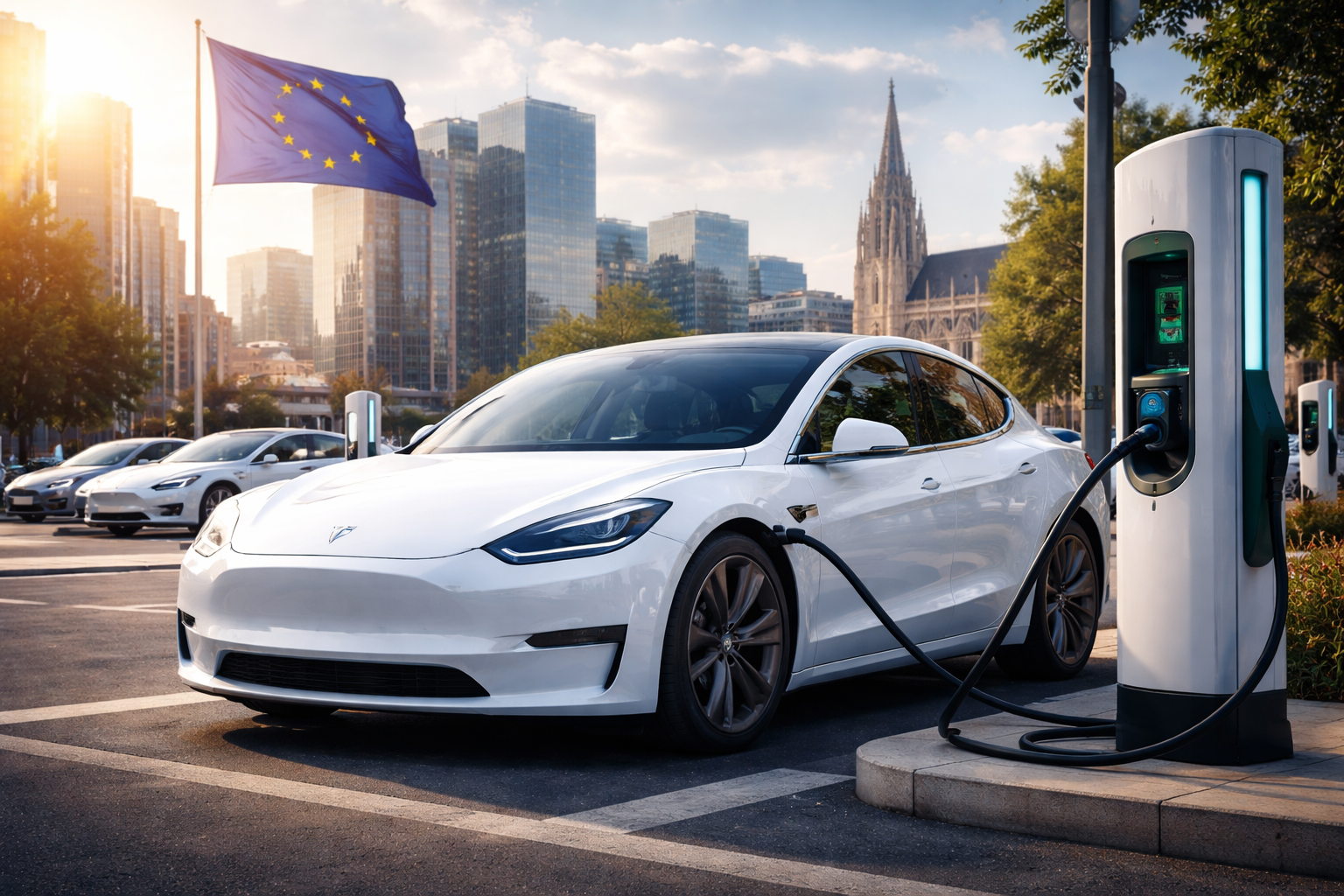
A significant recovery in the market performance of the world’s most valuable automaker was documented on Wednesday, as new registrations for Tesla vehicles exhibited a substantial surge across several European jurisdictions during the month of March. It was reported that registrations in France approximately tripled over the course of the month, reaching a level just shy of a record high established two years prior. Simultaneously, a more than twofold increase was observed in Nordic countries, signaling a pivot in the sales trajectory for the enterprise following a period of relative stagnation. This revitalization is viewed by market analysts as a critical turning point for the firm, which had previously seen a loss of nearly half of its European market share during the 2025 fiscal year. That prior decline was attributed to an intensified competitive landscape, particularly from emerging Chinese brands, as well as a perceived lack of new model iterations and public reactions to the political discourse associated with the company’s leadership.
The reversal of this downward trend is largely credited to the strategic rollout of more cost-effective versions of the Model Y and Model 3, which were introduced to consumers in both the United States and Europe late last year. These adjustments in pricing and product positioning appear to have successfully stimulated consumer demand, as evidenced by the return to growth in registrations first noted in February and accelerated throughout March. In France specifically, data from the French automotive body PFA indicated that 9,569 new vehicles were registered, representing a 203% increase compared to the previous year. This volume fell only three units short of the all-time monthly record established in December 2023. This spike in Tesla activity coincided with a broader expansion in the French automotive market, which recorded its first monthly growth in total car sales since October.
The momentum was found to be equally robust across the Nordic region, with Norway, Sweden, and Denmark reporting registration increases of 178%, 144%, and 96%, respectively. In Norway, the volume of new registrations reached , while Sweden and Denmark recorded 1,447 and 1,784 vehicles. Beyond the Nordic and French markets, growth was also documented in Belgium, the Netherlands, Italy, and Spain, with increases ranging from 23% to 89%. While a minor decline of 1.7% was noted in the Portuguese and Swiss markets for the specific month of March, the aggregate data for the first quarter of 2026 remains overwhelmingly positive across the majority of the continent. It has been noted by the company that registration figures are frequently skewed toward the conclusion of each quarter due to the specific logistics and shipping cycles employed for international deliveries.
From a macroeconomic perspective, the long-term outlook for electric vehicle manufacturers is expected to be influenced by the ongoing regional conflict in the Middle East. It has been suggested by economists at BNP Paribas that the war-driven escalation in petrol prices is likely to alter consumer purchasing trends in favor of electrified transport. While the impact on March registrations was described as marginal—given that such geopolitical factors primarily influence new order books rather than immediate registrations—the effects of the conflict are anticipated to become more visible in delivery data over the coming months. Reports from other major automotive manufacturers, such as Renault’s Dacia unit, corroborate this sentiment, with a noted spike in inquiries for electric and liquefied petroleum gas vehicles at both physical dealerships and digital platforms since the onset of hostilities.
The recovery of Tesla’s market share in Europe is also being analyzed within the context of the broader “energy-sovereignty” narrative. As global fuel supplies become increasingly volatile, the transition toward battery-electric vehicles is being viewed not only as an environmental imperative but as a strategic economic hedge for European households. The ability of the firm to maintain its competitive edge will likely depend on its capacity to sustain the production of its high-volume models while navigating the logistical challenges posed by disrupted maritime shipping routes.
Furthermore, the anticipated registration figures from Germany and Britain—Europe’s two largest automotive markets—are expected to provide additional clarity on the extent of this recovery later in the week. If the trends observed in France and the Nordic countries are replicated in these major economies, the first quarter of 2026 could be established as a landmark period for the stabilization of the electric vehicle sector. For now, the combination of aggressive pricing strategies and a shifting geopolitical landscape has provided the automaker with the necessary momentum to reclaim its standing against both traditional European manufacturers and new international entrants. The transition from a period of market share erosion to one of record-approaching registration volumes highlights the inherent elasticity of demand within the premium electric segment when supported by evolving consumer priorities and tactical product realignments.