



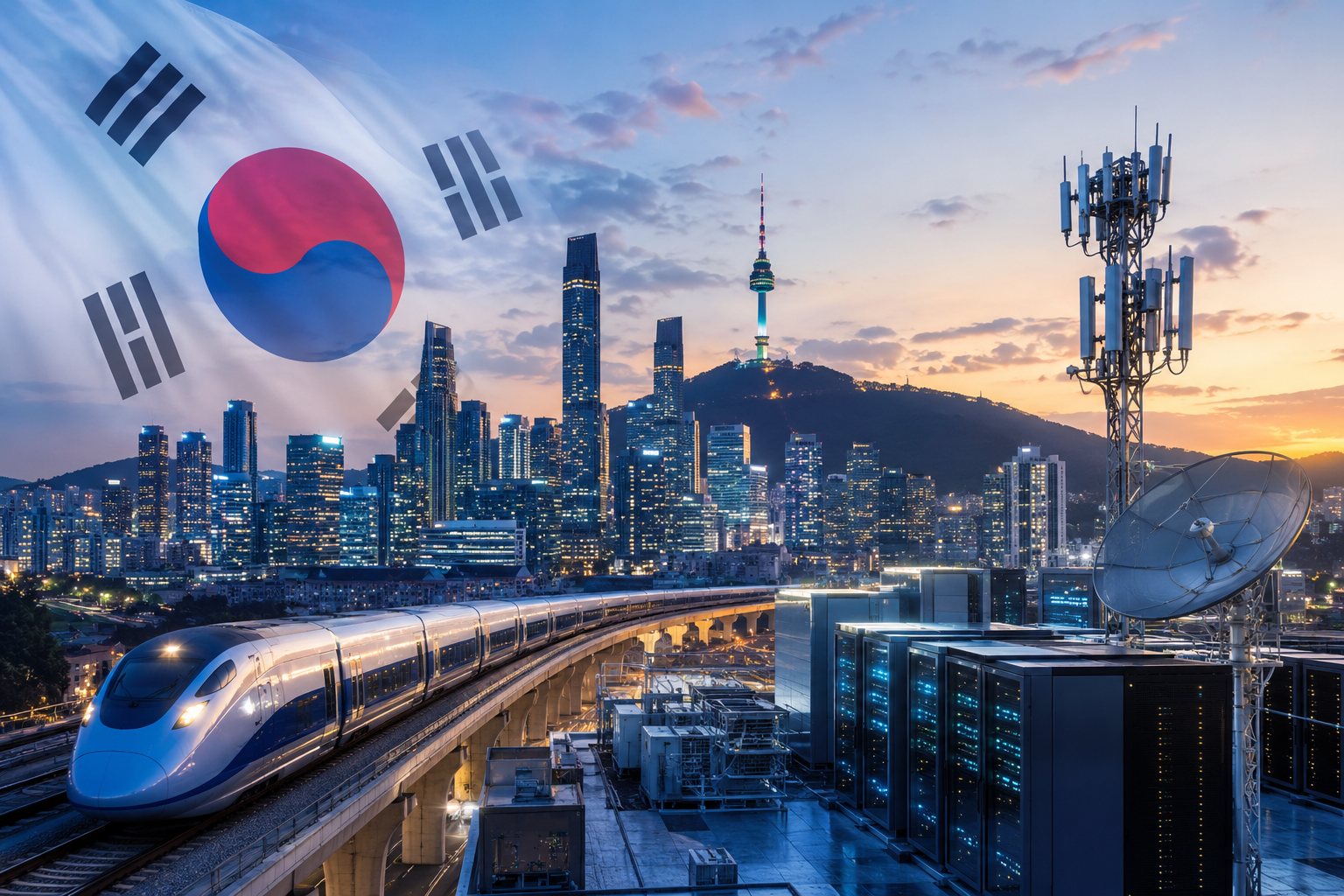
A public commitment was formally articulated on Tuesday by South Korean authorities to swiftly advance national investments in artificial intelligence and next-generation technology infrastructure, aimed at substantially bolstering overall economic performance. Concurrently, the nation’s 2026 economic growth forecast was elevated to a five-year peak of 3.0 percent, a momentum driven primarily by an unprecedented global surge in demand across the semiconductor sector. Within the semi-annual economic policy dossier published by the Ministry of Economy and Finance, this updated 3.0 percent expansion rate was designated as the strongest growth benchmark projected since 2021. This revised trajectory reflects a significant upward adjustment from the prior estimate of 2.0 percent, while standing in stark contrast to the modest 1.1 percent growth rate recorded during the preceding calendar year.
It was announced by the ministry that economic policies will be aggressively oriented around three foundational objectives, most notably including a strategic effort to elevate the nation’s structural potential growth rate to 3.0 percent from an estimated baseline currently lingering below the 2.0 percent threshold. As a core component of this structural overhaul, three major “mega-projects”—originally unveiled during the preceding month and encompassing massive investments in advanced semiconductor manufacturing, artificial intelligence data center construction, and physical artificial intelligence systems—will be fast-tracked for immediate implementation. To ensure the financial viability of these initiatives, it was confirmed earlier in the week that national budget expenditures for the year 2027 will be expanded by at least 10 percent, bringing total fiscal spending to more than 800 trillion won—equivalent to approximately $532.73 billion. This expanded budgetary allocation will prioritize the execution of these mega-projects, leveraging enhanced tax revenues generated by the booming semiconductor industry to absorb the fiscal expansion.
The broader economic backdrop was contextualized by Vice Finance Minister Lee Hyoung-il, by whom it was observed that while robust macroeconomic indicators—particularly export volumes propelled by global chip demand—represent clear structural opportunities, complex domestic challenges must simultaneously be navigated by the economy. Asia’s fourth-largest economy achieved its most rapid quarterly growth rate in nearly six years during the preceding three-month period, a surge heavily underpinned by international demand for high-performance memory and processing components vital for global artificial intelligence deployment.
In addition to short-term growth adjustments, ambitious long-term economic benchmarks were established within the ministry’s updated policy framework. Targets were set to elevate South Korea into the tier of the world’s four largest exporting nations, while simultaneously pushing gross national income per capita up to the $50,000 threshold, representing a substantial increase from the $40,000 baseline projected for the current year. The nation currently maintains a global position among the top five exporting economies.
To insulate domestic markets from persistent macroeconomic friction, comprehensive stabilization measures were pledged by policy leaders. These interventions are specifically designed to counter stubborn domestic inflation, persistent currency depreciation, and elevated sovereign bond yields linked directly to ongoing military conflicts across the Middle East. Strategic administrative tools scheduled for deployment throughout the second half of the year include the implementation of fuel price caps, the temporal extension of regulatory easing across foreign-exchange markets, and the provision of low-cost policy loans to key domestic sectors. Furthermore, the national inflation forecast for 2026 was officially adjusted upward to 2.6 percent, rising from the 2.1 percent rate previously projected in January. This inflationary pressure—heavily catalyzed by elevated international crude oil prices—is expected to outpace the 2.1 percent rate recorded in 2025, marking the most rapid pace of price increases documented since 2023.