


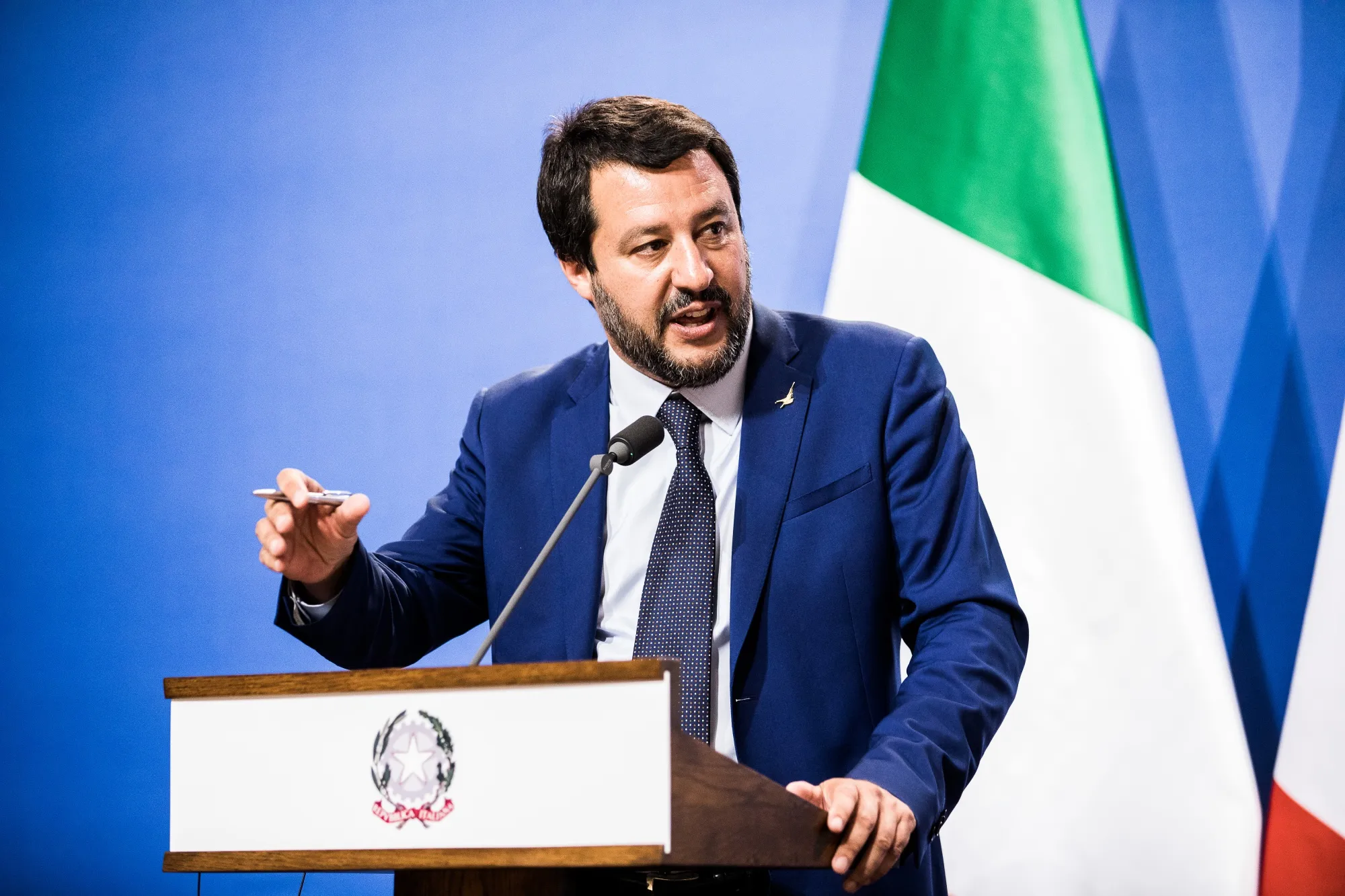
Italy’s Deputy Prime Minister Matteo Salvini said on Tuesday that his League party plans to propose a new levy on the country’s 10 largest banks as part of the government’s 2027 budget. The proposed measure would run for three years and is intended to provide additional support for Italy’s public finances.
Salvini, who also leads the coalition League party, said he expected the wider governing coalition to back the proposal. He made the comments during a visit to a construction site in Rome, according to Italy’s AGI news agency.
“We as the League will ask, and I am convinced the entire coalition will support us, for a three-year contribution from the top 10 Italian banks,” Salvini was quoted as saying.
Under the proposal, banks would contribute 5% of their annual profits for three consecutive years if the sector’s yearly earnings reached approximately €30 billion ($35 billion). Salvini argued that the banking industry could afford such a contribution given the strong profits being reported by its largest institutions.
Italy’s two biggest banks, Intesa Sanpaolo and UniCredit, recorded combined first-half profits of nearly €12 billion, according to Salvini. That figure would translate into annual earnings of more than €24 billion if the pace were maintained through the second half of the year.
The two lenders are the largest players in Italy’s banking industry, which is currently undergoing significant changes as merger and acquisition activity reshapes the sector. Salvini’s proposal would specifically focus on the country’s biggest financial institutions rather than smaller regional and local banks.
The League leader said the proposed levy would therefore be limited to the 10 largest lenders. Smaller banks would not be included in the measure, reflecting an effort to direct any additional burden toward institutions with the greatest scale and profitability.
The proposal comes after Italy already increased its demands on the financial sector through the 2026 budget. The government raised as much as €6 billion through a package of tax measures affecting banks, insurance companies and financial market transactions.
The prospect of another contribution from major lenders could therefore add to concerns within the financial sector over the impact of higher taxation. At the same time, Salvini’s comments indicate that the government is looking to profitable industries for additional resources as it seeks to strengthen public finances.
The proposed 5% annual charge would apply for three years, meaning the overall contribution from the targeted banks could become substantial if sector-wide profits remain close to the level cited by Salvini. However, the proposal is part of the League’s plans for the 2027 budget and would still need to move through Italy’s political and legislative process.
Salvini said he was confident that the rest of the coalition would support the initiative, although the government’s final approach to bank taxation will depend on negotiations over the budget.
The discussion comes at a time when Italy’s banking sector is benefiting from strong earnings while also undergoing consolidation. Intesa Sanpaolo and UniCredit’s combined first-half profit of almost €12 billion has highlighted the financial strength of the country’s leading lenders and provided a basis for Salvini’s argument that large banks can make a further contribution to public finances.
The proposed measure would consequently place another potential financial obligation on Italy’s biggest banks while leaving smaller institutions outside its scope. For the government, the plan could provide an additional source of revenue; for the banking sector, it would represent another increase in the tax burden following measures introduced in the 2026 budget.