



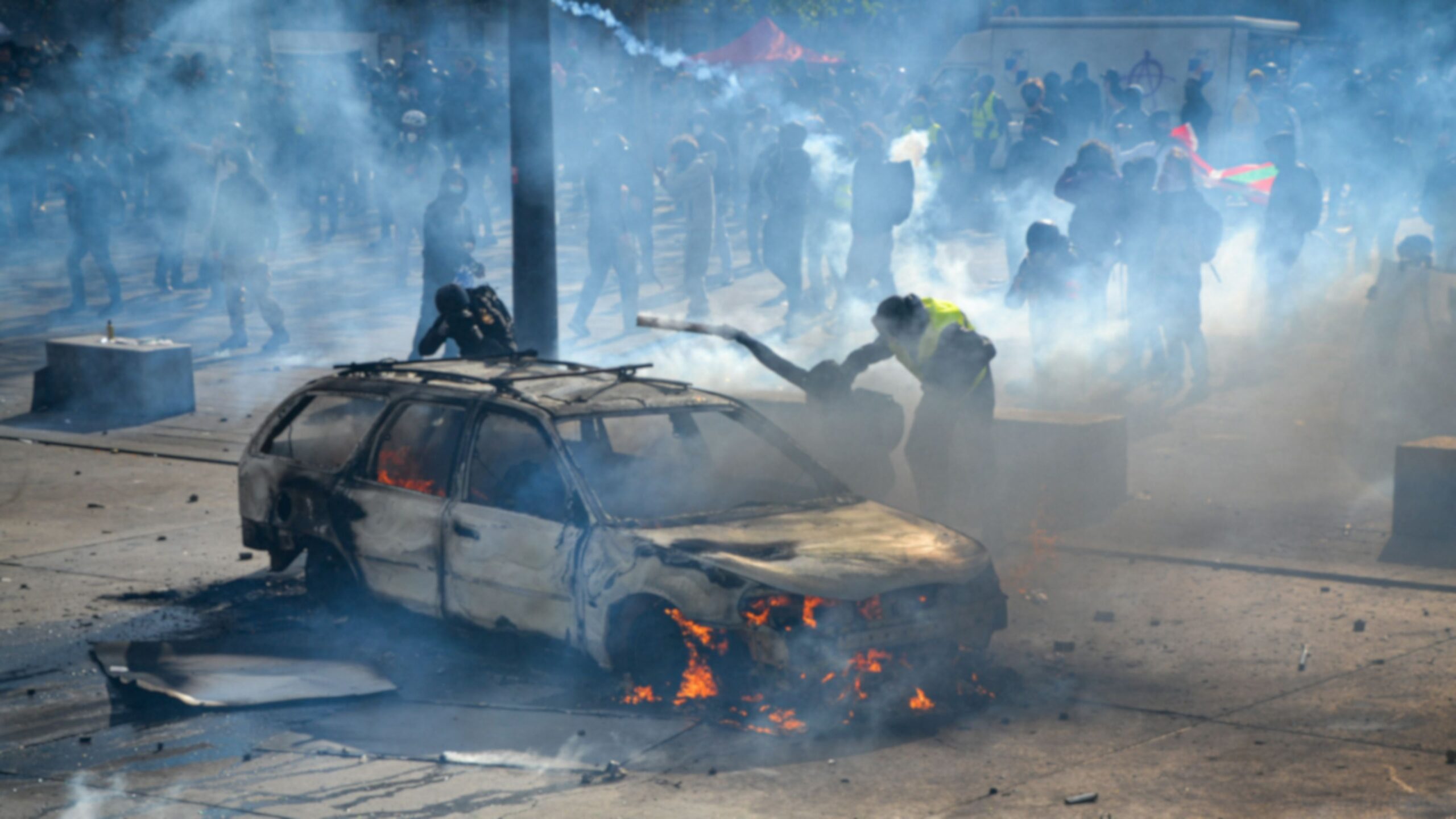
European insurers are tightening the terms on which they cover strikes, riots and civil commotion, as a wave of street protests that began in France spreads across the region. According to Bloomberg, underwriters are capping limits, raising deductibles and in some high-risk locations withdrawing riot cover altogether.
The shift marks a significant change in how the industry views civil unrest. Analysts at Morningstar DBRS argue that riot losses now behave more like a natural catastrophe than a secondary peril, because damage can strike several cities at the same time and accumulate quickly.
The repricing comes as French insurers count the cost of October’s disturbances and as a new state-backed riot scheme prepares to take effect. For businesses and property owners across Europe, the result is likely to be higher costs and narrower protection.
Key Takeaways
- Insurers in Europe are cutting riot cover limits, raising deductibles and excluding some high-risk locations.
- Morningstar DBRS estimates insured losses from October’s unrest in France at up to €1.2 billion.
- AM Best says insurers are increasingly pricing riot risk separately rather than bundling it into standard property cover.
- France’s new mandatory riot cover scheme is due to start in January but will not cover October’s losses.
Protests Spread Beyond France
The unrest began with student demonstrations in France and broadened into region-wide protests over the cost of living and public services. More than half a million people marched in France on 17 October, and several cities experienced looting, arson and attacks on public buildings, according to reports by Bloomberg and Insurance Business. French authorities reported close to 2,400 arrests.
Demonstrations have since been recorded in Germany, Belgium and Portugal, among other European countries. Risk consultancy Verisk Maplecroft has said its measures of civil unrest in Europe point to the most elevated level of risk in several years. The political backdrop in France has already weighed on markets, with French political turmoil pushing the euro lower earlier this month.
Underwriters Rethink Riot Exposure
Insurers are responding by treating strikes, riots and civil commotion, known in the market as SRCC, as a distinct risk. Rating agency AM Best said carriers are increasingly carving the peril out of standard property policies and underwriting it on a stand-alone basis, citing recent large losses from unrest in markets including the United States and New Caledonia.
Allianz, Europe’s largest insurer, has taken a more selective approach. Ian Humphries of Allianz told Bloomberg that the group is not imposing blanket restrictions but is assessing risks individually, taking into account factors such as a property’s proximity to areas of unrest. Broker Howden launched a dedicated analytics tool, UNREST, in September to help insurers map exposures at property level, arguing that older models failed to capture current risks.
The tightening contrasts with conditions in other parts of the market. Property reinsurance prices have been softening, a trend reflected in recent results such as Hiscox’s third-quarter update amid softer reinsurance rates.
Losses Test French Insurers
Morningstar DBRS estimates that insured losses from October’s unrest in France could reach up to €1.2 billion, and has warned the figure could rise if disturbances continue. That would exceed the roughly €730 million in insured losses from the riots of June 2023 and the approximately €220 million attributed to the Gilets Jaunes protests of 2018 and 2019.
The agency has noted that the wider economic cost to retailers and other businesses could be several times the insured amount, as many losses fall outside policy terms or below deductibles. For large insurers, riot claims add to a year in which catastrophe costs have already shaped earnings, as seen when AIG reported higher catastrophe losses alongside premium growth.
State Backstop Takes Shape
France has approved a state-backed mechanism that will make riot cover mandatory in qualifying home and business property policies. The scheme will be managed by the public reinsurer Caisse Centrale de Réassurance, which will reimburse the bulk of qualifying riot losses, with insurers retaining around 10% of the exposure, according to Bloomberg and Insurance Business.
The fund is expected to be financed through insurer contributions and a levy reported at about 0.8% of relevant premiums. It is due to start in January, but both Morningstar DBRS and industry reports indicate that it will not respond to losses from the October disturbances, which remain with insurers and their reinsurers.
Industry participants expect the debate over riot cover to feature prominently in the January 2027 reinsurance renewals, as cedants seek capacity for a peril that reinsurers increasingly view as an accumulation risk. Further protests, the performance of the French scheme in its first months and any move by other European governments to create similar backstops are likely to determine how far insurers tighten terms in the year ahead. More coverage is available in our Insurance section.