
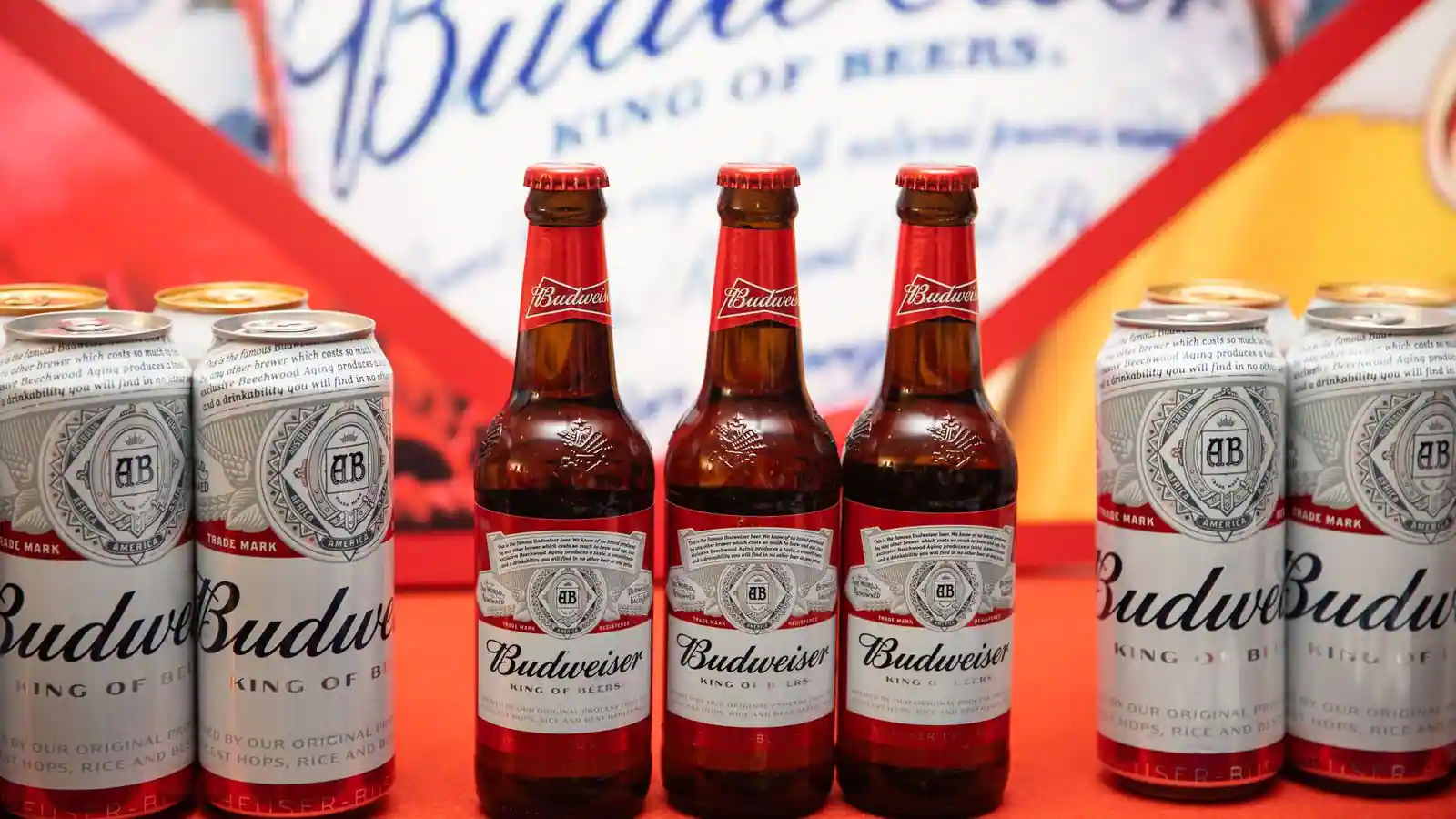
Budweiser revenues in the Gulf nation will be significantly reduced by a last-minute move to forbid alcohol sales at World Cup stadiums in Qatar, but the owner’s international marketing push won’t be derailed, according to industry analysts.
The world’s largest brewer, Anheuser-Busch InBev (ABI.BR), is at least annoyed by FIFA’s decision to impose the ban just two days well before the event begins.
Its major World Cup sponsor, Budweiser, was scheduled to only sell alcoholic beer inside the ticketed area around all of the eight stadiums about three hours prior to and one hour following each game throughout the four-week competition.
As word of the reversal spread, Budweiser’s official Twitter said, “Well, this is awkward.” Later, the tweet was taken down.
Since the 1986 World Cup in Mexico, Budweiser has sponsored the event.
The tournament, which is conducted every four years, usually increases beer consumption worldwide. The Belgian company that makes brands like Stella Artois as well as Corona wants to earn money from the millions of euros it has paid to be the official brewer of the competition.
Due to increased consumption during the typically slow colder months and a volume increase of more than 1% annually, the 2014 World Cup increased AB InBev’s beer sales in Brazil, the host nation and its second most lucrative market behind the United States, by 140 million litres.
But Qatar 2022 still was going to be different because the first World Cup was staged there, in a devoutly Muslim nation with draconian alcohol laws that forbade drinking in public.
AB InBev Chief Executive and figure in leadership Michel Doukeris stated in July that the tournament will provide a fantastic chance to highlight non-alcoholic beverages, such as Budweiser Zero, in light of the announcement that the stadium stands would be alcohol-free.
Instead of only having two days to plan, AB InBev might have attempted to replace traditional Budweiser with its non-alcoholic counterpart outside stadiums, and may even have made more money given the latter’s customarily greater margin.
The last-minute change of opinion was likely to result in a disagreement, according to Elaina Bailes, a member of the committee of the London Solicitors Litigation Association.
She said that Budweiser would have missed brand presence during matches and now faced an expensive logistical challenge over what to do with dispersed stock it cannot sell. This might have an impact on contracts throughout their distribution chain, she said.
The key concern, according to Ed Weeks, manager of commercial resolving disputes at British legal firm Cripps, was whether a rapid change was contemplated in the FIFA-Budweiser deal.
If they did and included a stipulation that placed the burden on Budweiser, they will be feeling quite proud right now. He claimed that FIFA and its attorneys would have had a terrible weekend if they hadn’t.
Requests for comment regarding the potential for a legal dispute were not immediately answered by FIFA.
However, FIFA head Gianni Infantino claimed FIFA had struggled to persuade the Qatari government to uphold the initial proposal to allow the sales during a news conference on Saturday in Qatar.
He claimed that the team is to blame for the late change in policy. It was an effort to test the feasibility of the idea.
He continued by saying that FIFA & Budweiser had been collaborators for many years and looked ahead to continuing their partnership.
He claimed that this particular circumstance had brought everyone even closer together.
In a statement, AB InBev stated that certain stadium activations were not possible owing to factors beyond its control and declined to make any additional comments.
But according to Doukeris, fans around the world, many of whom have an AB InBev beer in their hands—from a Jupiler in the football-savvy Belgium to a Brahma in Brazil—have a much higher impact on beer sales.
In fact, compared to just over 50 for the 2018 edition, the brewer has launched its largest-ever World Cup marketing in over 70 markets, which includes more than double the amount of participating nations.