

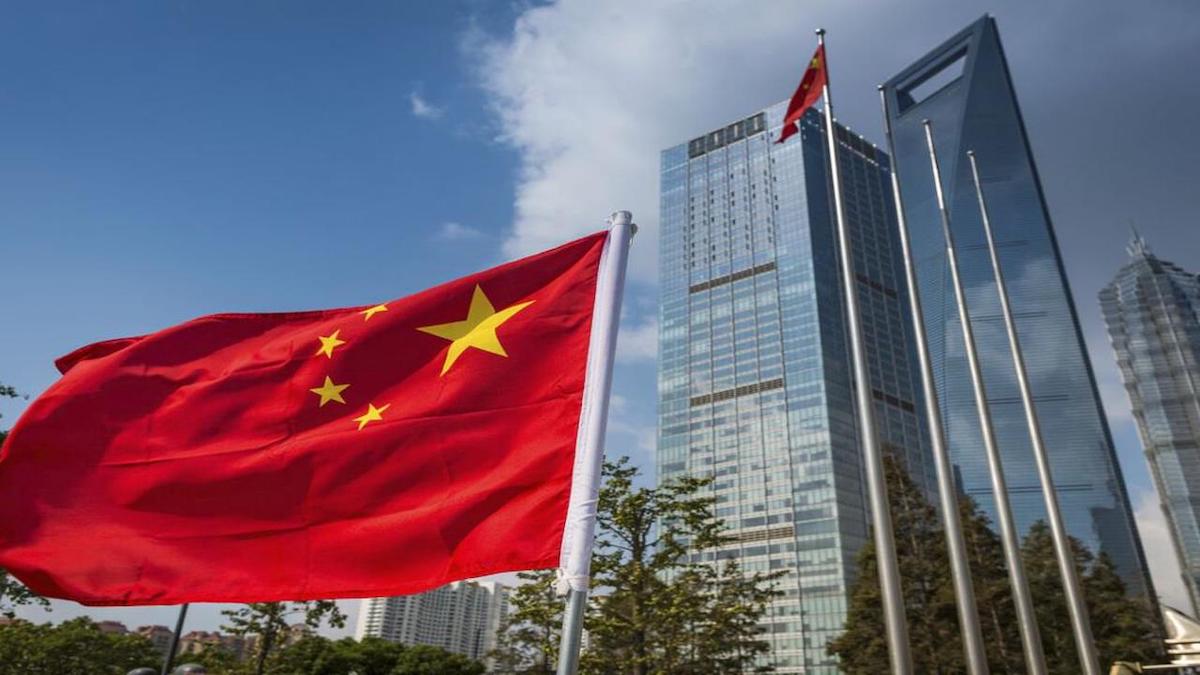
Although slower domestic building impacted on raw material needs, China’s factory-gate inflation dipped to a 17-month trough in July, bucking global pricing pressures.
However, consumer price increases touched a two-year peak as pork supplies constricted.
The National Bureau of Statistics (NBS) reported on Wednesday that the producer pricing index (PPI) increased 4.2% year over year after increasing 6.1% in June and falling short of analyst expectations for a 4.8% gain.
China’s producer price rise has moderated since it reached a 26-year high in October of last year, allowing authorities some room to bolster the slowing economy just as central banks worldwide rush to aggressively raise interest rates to quell excessive inflation.
While China’s relatively low inflation has mostly been caused by sluggish domestic demand, July’s downturn was also attributed to an easing of global pricing pressures, such as declining oil prices.
Factory gate inflation will continue to decline during the rest of the year, based on what was said by the Chinese Economist Zichun Huang, at Capital Economics, because of a further decline in commodity costs, easing supply constraints, and a higher base for comparison.
PPI registered its first monthly dip since January, down 1.3% month-over-month, an indication of the weakening pace. The cost of metals & petrochemicals saw the largest drops.
A second statement from NBS revealed that prices in the mining activities and washing sector increased 20.7% annually, down 10.7 percentage points over June, while those in the extraction of oil and gas sector increased 43.9% annually, up 10.5 percentage points.
China’s main purchasing managers’ index revealed this week that input prices fell in July as a result of falling energy and raw material prices, indicating a future reduction in producer prices.
Due to strong COVID-19 regulations, a fragile real estate market, and a cautious consumer attitude, the second-largest economy in the world has significantly slowed down and narrowly avoided contracting in the June quarter.
The consumer price index (CPI) rose 2.7% from a year ago, the quickest rate since July 2020, although it fell short of expectations for a 2.9% increase.
The primary factor driving consumer price increases is foodstuff inflation, which increased 6.3% year over year in July after increasing 2.9% in June.
Pork prices, which soared 20.2% year-over-year and reversed a 6.0% fall in June as supply stalled, were the primary factor behind the overall food price spike.
Core CPI, a better indicator of underlying inflation because it does not include volatile food and energy costs, remained sluggish, increasing by just 0.8% less than the 1.0% increase in June.
Although it is anticipated that the People’s Bank of China (PBOC) would maintain loose monetary conditions in the face of weak economic growth, the bank’s ability to do so is constrained by concerns about capital outflows as the U.S. Federal Reserve rapidly hikes interest rates.
Therefore, even if consumer inflation approaches China’s tolerance level of 3%, the PBOC will probably rely on more focused easing to maintain the recovery.
Given the current global inflationary challenges and interest rate increases in other major nations, the likelihood of a near-term universal interest rate drop is minimal, as per the words of chief economist Bruce Pang, at Jones Lang Lasalle.
Erin Xin, an economist at HSBC, wrote in a note that overall CPI inflation is still within the PBOC’s objective of about 3%, giving it the policy leeway to continue being accommodating.
He further stated that the PBOC must continue to be accommodating due to the COVID-19 clusters’ ongoing uncertainties and the dismal real estate market mood.