



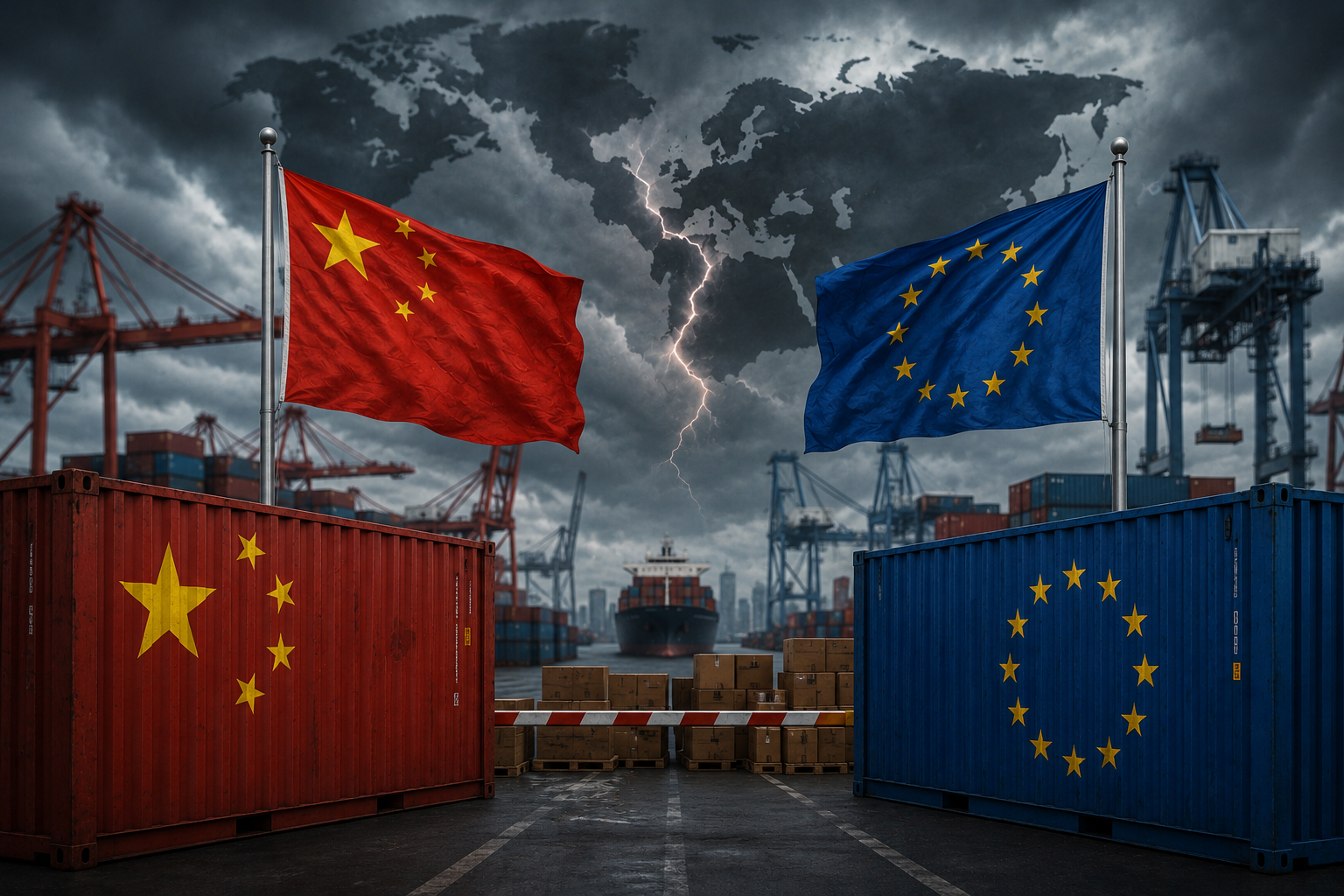
A profound sense of disappointment was expressed by the Chinese government regarding ongoing initiatives within the European Union to restrict and heavily regulate investments originating from China. These concerns were articulated by Chinese diplomat Qu Xun during a commercial conference convened in Madrid on Wednesday, during which a stark warning was issued that the implementation of such protectionist measures could ultimately compel Beijing to close its economic doors to European partners. In public remarks that were widely noted by market observers for their unusual candor and directness, the commercial representative at the Chinese embassy in Spain stated that a series of controls, limitations, and sanctions directed toward China by European authorities over the preceding three-month period had generated significant dissatisfaction within the Chinese administration.
It was asserted by the diplomatic representative that such restrictive actions have a tendency to isolate the nation, thereby forcing defensive reactions and potentially leading to a closure of market access that could fundamentally alter the strategic mentality of Chinese policymakers. These observations were delivered during a panel discussion hosted at Madrid’s IESE Business School, where it was recalled that Europe had traditionally been perceived by Beijing as an economic region characterized by an open and collaborative mind. The current diplomatic friction has been primarily attributed to legislative developments within the European Parliament, where early-stage draft regulations are being advanced to establish stringent rules governing European Union control and ownership of manufacturing capabilities within critical, strategically sensitive industries. Furthermore, these legislative frameworks seek to severely limit the participation of suppliers deemed to be of high risk within the continent’s vital cybersecurity infrastructure, an agenda that has caused considerable friction with the Chinese government.
In response to these regulatory pressures, concerted efforts have been made by Beijing to influence the drafting process, with official requests being submitted for the removal of key provisions relating to strict rules on origin, domestic procurement mandates, and localized technology requirements within the manufacturing guidelines. Additionally, demands have been made by Chinese representatives to water down and broaden the legal definitions used to classify high-risk suppliers within the proposed cybersecurity regulations. This legislative push by European authorities to secure greater strategic autonomy and industrial independence is unfolding concurrently with high-level bilateral efforts by China and the United States to repair their own strained trade relations. This dynamic was underscored by the arrival of American President Donald Trump in Beijing earlier on Wednesday, who was accompanied by a prominent delegation of chief executive officers seeking to resolve long-standing commercial disputes and market barriers with Chinese authorities.
For an extended duration, European and American corporate leaders have consistently leveled criticisms against the rising volume of exports produced by heavily subsidized Chinese state enterprises, characterizing the practice as inherently unfair and economically distorting. Consequently, Western business coalitions have repeatedly advocated for greater, reciprocal market access within the domestic Chinese economy, where numerous strategic sectors remain completely restricted or heavily barred against foreign investors. While acknowledging the validity of these systemic grievances, the Chinese diplomat conceded that European enterprises do encounter significant obstacles regarding market penetration within China, noting dryly that the global business environment is inherently cruel. However, it was simultaneously argued that international corporations must adapt to the unique regulatory and operational environments of each sovereign nation, and an appeal was made for all participating global entities to respect established rules rather than attempting to enforce external standards.
The escalating tension highlights a broader shift away from the era of hyper-globalization toward a fragmented landscape dominated by economic nationalism and supply chain decoupling. As the European Union seeks to de-risk its critical infrastructure from single-source dependencies, the intersection of national security and international commerce has become increasingly complex. The outcome of these regulatory battles will undoubtedly dictate the future trajectory of Euro-Asian trade flows, determining whether a cooperative economic framework can be preserved or if a cycle of retaliatory trade barriers will be initiated by both global powers.